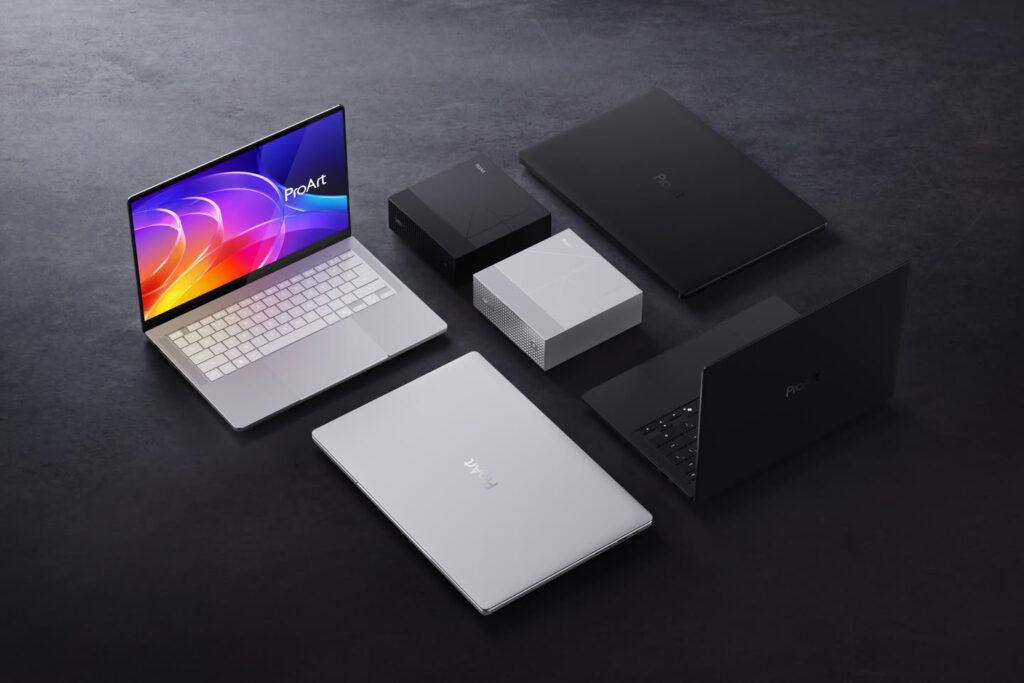
ASUS has announced the global launch of its new ProArt P16 and P14 laptops and the compact ProArt GR1X mini PC, all powered by NVIDIA RTX Spark. The new Windows systems are designed for creators, AI developers and professionals who want to run demanding AI workloads locally while still having the option to use cloud services when needed.
NVIDIA RTX Spark combines a Blackwell RTX GPU with a Grace CPU, fifth-generation Tensor Cores with FP4 support and NVIDIA NVLink-C2C technology. ASUS says the platform can deliver up to 1 petaflop of AI performance and provide up to 128GB of high-bandwidth unified memory. This allows the systems to handle workloads that can exceed the memory capacity of conventional PCs.
RTX Spark brings larger local AI workloads to Windows
The large unified memory capacity is one of the main features of the new ProArt systems. Depending on the AI model, quantization, context length and available system memory, ASUS says users can run large language and vision-language models, image and video generation pipelines, LoRA customization, agent-based workflows and complex 3D scenes directly on the PC.
Running AI locally can also give users more control over their data and workflows. Prompts, source files, project data and selected models can remain on the device, while some workloads can continue to operate without an internet connection. Local computing can also reduce reliance on pay-per-use cloud services for repeated experimentation and generation.
However, ASUS is not presenting local AI as a replacement for cloud computing. Cloud services can still be used for larger models or when additional computing capacity is required. The RTX Spark systems are instead designed to let users choose between local, cloud or hybrid processing depending on the workload, privacy requirements and available computing resources.
ASUS is also building a software ecosystem around the hardware. Its ProArt applications include MuseTree, which supports local image generation using FLUX and Wan models, and StoryCube, which uses AI for scene recognition, media organization and asset management. The company has also partnered with ComfyUI, allowing users to create and reuse visual AI workflows on their systems.
The ecosystem also includes Hermes from Nous Research. Hermes is an open-source AI agent designed to work with desktop applications, terminal environments and local files. Through a dedicated Hermes Skill, it can connect with ASUS MuseTree for local image and video generation. ASUS is also introducing Zenni Claw as a native assistant for everyday AI and productivity tasks.
ProArt P16, P14 and GR1X offer different form factors
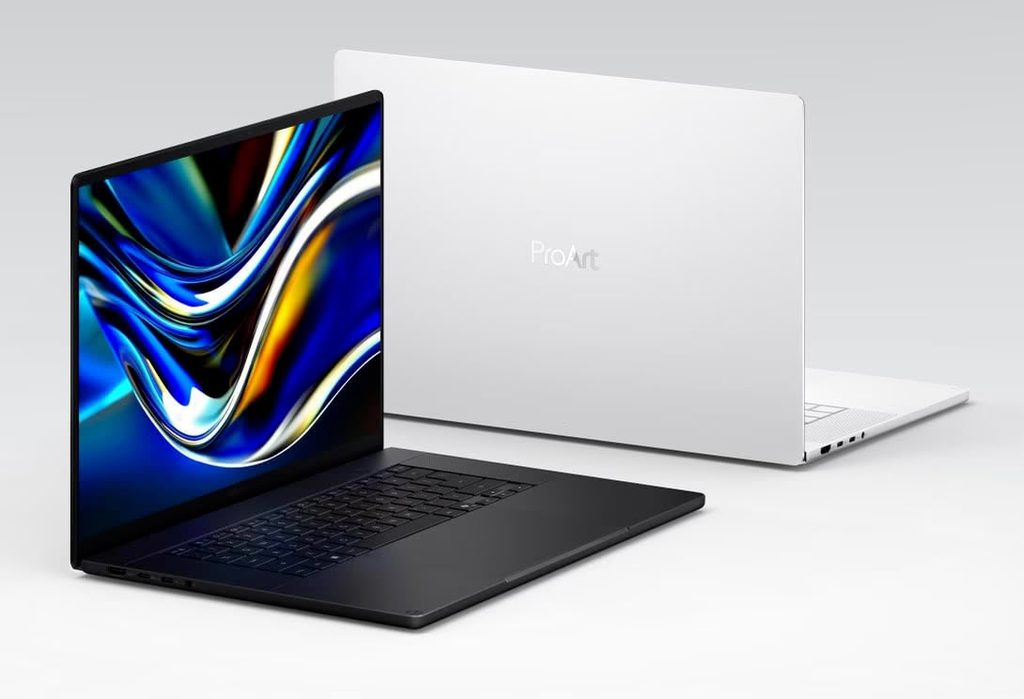
The ProArt P16 and P14 bring the RTX Spark platform to portable creator laptops. ASUS has focused on keeping both systems thin and light while providing the memory and processing capabilities needed for local AI workloads.
The 16-inch ProArt P16 measures 12.9 mm thick and weighs 1.77 kg, making it the thinnest 16-inch ProArt laptop from ASUS. The P14 is 13.9 mm thick and weighs 1.48 kg, making it the lightest ProArt laptop in the lineup. The P16 can include a battery of up to 99.9Wh, while the P14 supports up to a 90Wh battery.
Both laptops feature ASUS Lumina Pro OLED displays with Delta E<1 color accuracy, up to 1,600-nit peak brightness, a 120Hz variable refresh rate and anti-reflection technology. The P16 is available with up to a 4K display and NVIDIA G-SYNC, while the P14 supports up to 3K resolution. Both models also feature CNC-machined designs, precision haptic touchpads and comprehensive connectivity.
The ProArt GR1X takes the same platform into a compact desktop. Measuring 150 x 150 x 51 mm, the mini PC is designed for creators, developers and small teams that need a local AI system that can remain available for extended workloads. Its compact chassis uses dual-fan cooling and supports dual M.2 SSDs.
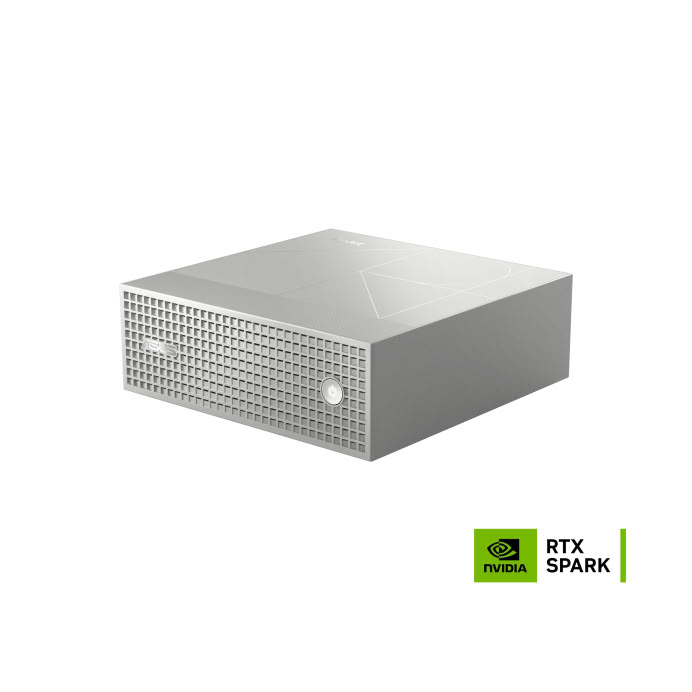
Connectivity includes 10GbE networking, Wi-Fi 7 and Bluetooth 5.4, while the GR1X can support up to four 4K displays. ASUS says the system is intended for AI agents, model serving, content generation and creative workflow automation. It will be offered in silver and black finishes.
Pricing and availability
In Canada, ASUS will begin accepting pre-orders for selected RTX Spark-powered ProArt P14 and P16 configurations on October 7, 2026. Shipping is expected to begin on October 16.
The ProArt P14 will initially be offered with 24GB or 128GB of LPDDR5X memory, while the ProArt P16 will be available with 32GB or 128GB configurations. ASUS says 48GB P14 and 64GB P16 models will become available later this year.
Canadian pricing starts at C$3,499 for the ProArt P14 and C$4,999 for the ProArt P16. The 128GB P14 and 32GB P16 will also be available through Best Buy Canada, while the broader range of configurations will be sold through the ASUS Store.
ASUS says pricing, configurations, pre-order schedules and retail availability may vary depending on the region.
The new ProArt RTX Spark systems represent ASUS’ push toward more capable local AI computing on Windows. With up to 128GB of unified memory, Blackwell-based RTX graphics and support for a growing range of local AI tools, the P14, P16 and GR1X are designed to handle workloads that traditionally required more powerful desktop hardware or cloud computing. The combination of local and cloud processing also gives creators and developers more flexibility over where and how their AI workloads are handled.



More Stories
Starforge Launches Beautiful Frieren Themed Gaming Collection
Brook StarRay Wireless Controller Offers Fast and Flexible PS5 Gaming
ASUS ROG Rapture GT-BN98 Brings Reliable WiFi 8 Performance