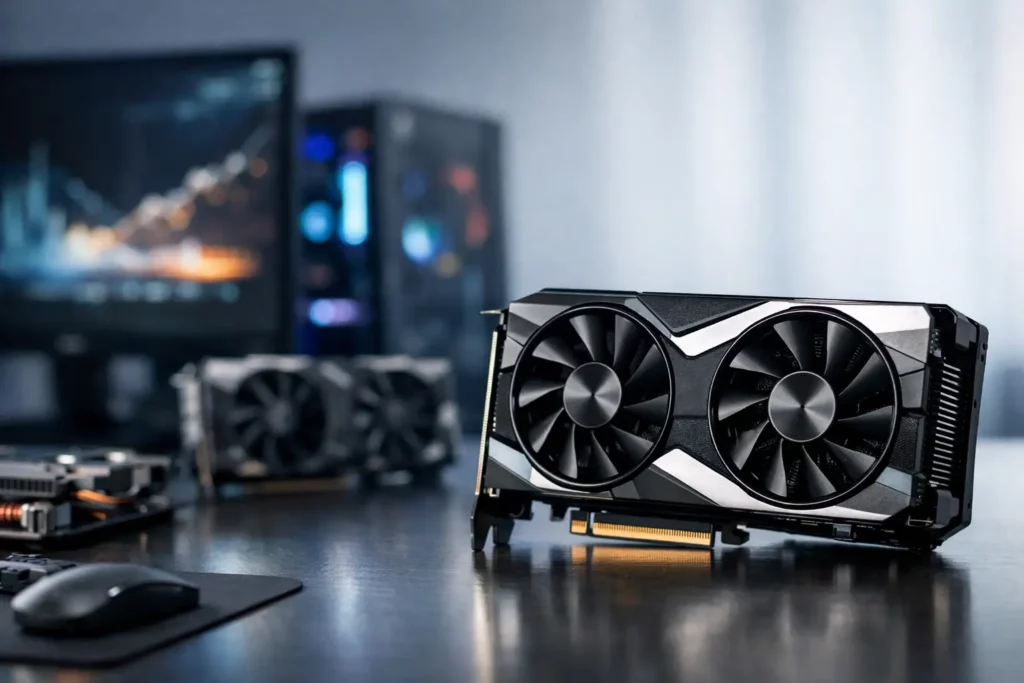
A new graphics card release can make an otherwise sensible PC upgrade plan feel outdated in a week. One teaser drops, benchmark leaks start flying, and suddenly the card you were ready to buy looks like terrible timing. For gamers and PC shoppers, that is the real story around any GPU launch – not just raw specs, but what the release changes for pricing, availability, and whether waiting actually pays off.
Why a new graphics card release matters beyond specs
On paper, every GPU launch follows the same script. A company announces a new model, highlights better performance, talks up AI features or ray tracing gains, and positions the card as the obvious next step. In practice, the impact is usually messier.
A new card does not just affect the buyer who wants that exact model. It can push older cards into discount territory, make a midrange build suddenly more attractive, or leave budget shoppers frustrated if the launch focuses on premium tiers first. That is why a new graphics card release matters even if you were not planning to buy the flagship. The ripple effect often matters more than the headline product.
That also explains why launch-day excitement can clash with real-world value. A GPU can be faster and still feel underwhelming if the price climbs too far, power draw jumps, or stock disappears in minutes. Enthusiasts notice those trade-offs fast, and regular buyers feel them even faster when retailers start adjusting prices across the stack.
What usually happens right after launch
The first phase is all hype, but the second phase is where the useful information shows up. Official reveal events tend to focus on best-case gains, often compared against older cards in hand-picked scenarios. The more important part arrives once broader testing starts and buyers see how a GPU performs across modern games, creator workloads, thermals, and noise.
That is also when expectations get corrected. A card marketed as a huge leap may turn out to be a modest generational step. On the other hand, a model that looked unremarkable on a spec sheet can end up being the sweet spot if it lands at the right price.
Availability is the next big variable. Some launches are smooth enough that cards show up near MSRP within days. Others become a waiting game, especially if demand spikes from gamers, creators, system builders, and AI-focused buyers at the same time. A strong announcement means less if shelves stay empty or partner models launch with inflated pricing.
The big questions buyers should ask
Is the performance jump actually meaningful?
Not every generational jump is dramatic. For someone on a card that is already one or two tiers above mainstream, the gains may be hard to justify unless the new model delivers stronger frame generation support, noticeably better ray tracing, or major efficiency improvements. For someone still on an older GTX or early RTX-era card, even a midrange launch can feel like a serious step forward.
The key is to match the improvement to your actual use. If you play competitive shooters at 1080p, a huge boost in 4K ray tracing numbers may not matter much. If you are gaming on ultrawide or pairing a GPU with a high-refresh 1440p panel, that same release could suddenly make sense.
Is the price right for the tier?
This is where launches often get complicated. A new GPU can look impressive until you compare it against discounted last-gen models. If the new card costs significantly more while offering only moderate gains, the smarter buy might be the older option – assuming stock still exists and feature support is close enough.
There is also the issue of stack positioning. Sometimes a company launches a card with a name that suggests mainstream value, but the actual price lands closer to enthusiast territory. That mismatch can sour reception quickly, especially for readers who track GPU history and know what certain classes of cards used to cost.
Does your system need more than just the GPU?
A new graphics card release can trigger hidden upgrade costs. Higher-end GPUs may need a stronger power supply, a larger case, better cooling, or a newer CPU to avoid bottlenecks. If your current setup is aging across the board, that GPU price is only part of the total spend.
That does not mean the launch is irrelevant. It just means the best move may be waiting until prices stabilize or targeting a lower tier that fits your system more cleanly. Spending big on a GPU only to discover your platform limits it is one of the fastest ways to turn launch excitement into buyer’s remorse.
Why midrange cards usually matter most
The loudest conversation around any launch tends to focus on the top models, but the real volume market is still midrange. That is where most gamers shop, and it is where a new graphics card release can have the biggest practical impact.
A great midrange card can reset expectations for 1080p and 1440p gaming, especially if it balances frame rates, VRAM, efficiency, and price better than the outgoing generation. A weak midrange launch, on the other hand, can leave buyers stuck choosing between overpriced new hardware and aging inventory that may disappear quickly.
This is also the part of the market where naming gets confusing. A buyer looking at a new 60-class or 70-class GPU may assume it follows the value pattern of older generations, but that is not always true. Prices have shifted, workloads have changed, and features like upscaling and frame generation now influence buying decisions almost as much as traditional raster performance.
Features are now part of the value story
Raw frame rates still matter, but modern GPU launches are increasingly shaped by software. Upscaling, frame generation, AI-assisted rendering, encoding support, and creator-focused features all play into how useful a card feels over time.
That can cut both ways. If a new GPU introduces features that your current card cannot access, waiting may make sense. If the feature list sounds exciting but support is limited or inconsistent at launch, patience may be smarter than impulse.
For gamers, the practical question is simple: does the new card improve the games you actually play? For creators and hybrid users, things get broader. Video exports, streaming quality, AV1 support, and productivity acceleration can make a GPU worth considering even if gaming gains alone look modest.
Timing still matters more than most people admit
Buy at launch or wait a few weeks?
For most buyers, waiting is usually the safer move. Early listings can fluctuate, partner cards can come in far above expected pricing, and first-wave enthusiasm tends to blur the value picture. A short delay often gives you cleaner benchmarks, better stock visibility, and a more realistic sense of whether the card is a hit or just the newest thing on the shelf.
That said, there are exceptions. If your current GPU just failed, or you are building a machine around a locked-in budget and a launch card fits it well, buying early can still be reasonable. You just want to know whether you are paying for performance or paying for launch-week chaos.
What if you are shopping used?
This is where a new release can quietly help. Older GPUs often soften in price once the market adjusts, even if the new models are not direct replacements. Sellers respond to attention shifts, and used listings can become more attractive as buyers chase the latest hardware.
The trade-off is support and longevity. A discounted older card may be great value today, but a newer model can hold up better if feature adoption accelerates over the next few years. It depends on whether you want the cheapest path to decent performance or a card that feels current for longer.
The launch-day noise is not the whole story
GPU launches are built for momentum. The branding is sharper, the claims are bigger, and social feeds fill up fast. But the best buying decisions usually come from ignoring the first wave of noise and focusing on where the card actually lands after the dust settles.
That means watching street pricing, seeing how board partner models compare, checking power and thermal behavior, and looking at performance in the games people really play. It also means accepting that not every launch is aimed at you. Some are halo products designed to show off a generation. Others are the cards that actually move the market.
For TechLifestyler readers balancing gaming, work, and everyday tech spending, that distinction matters. A flashy release might dominate the conversation, but the better question is whether it improves your setup enough to justify the timing and the cost.
The smartest way to approach a new graphics card release is to treat it like a market shift, not just a product drop. Sometimes that means buying the new card. Sometimes it means grabbing last-gen hardware at a better price. And sometimes the best move is doing nothing for another month and letting the market calm down a bit. If a launch changes your options, it has already done its job.







1 thought on “New Graphics Card Release: What to Watch”