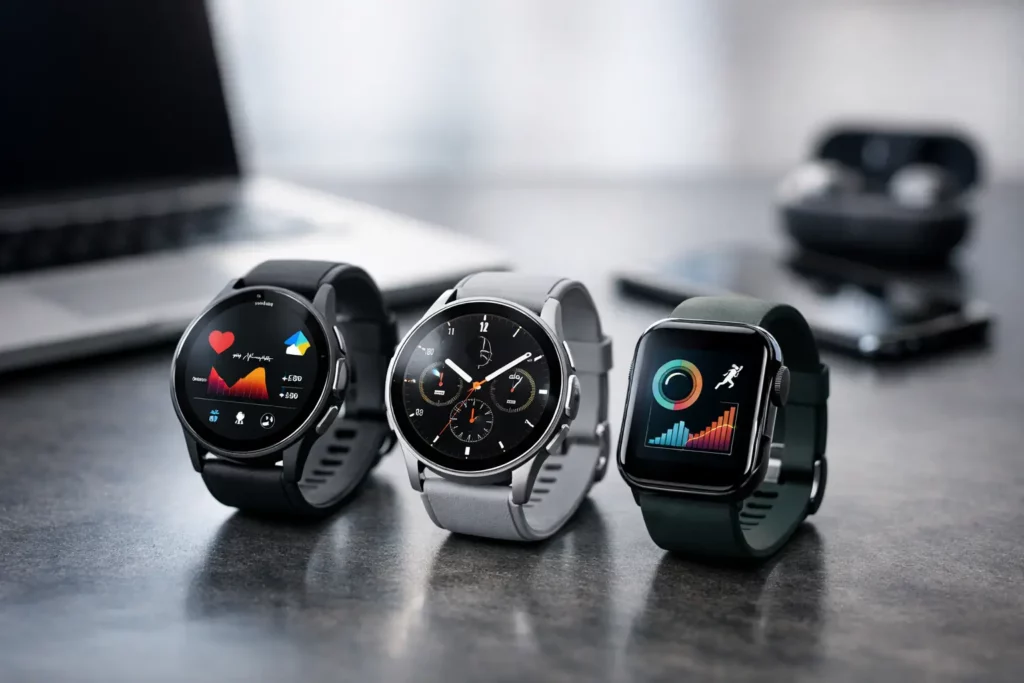
Wearables are having another big moment, and the latest smartwatch release news shows why. Brands are pushing harder on health tracking, battery life, AI-powered software, and tighter phone integration, which means new launches are starting to feel less like routine refreshes and more like a fight for wrist space.
For anyone tracking gadgets the way they track game reveals or GPU drops, smartwatches are back in that interesting zone where small upgrades can actually change buying plans. A brighter display, one extra day of battery, better recovery metrics, or improved app support can matter a lot more than a flashy spec sheet suggests. That is especially true now that buyers expect one device to handle fitness, notifications, payments, sleep tracking, and a bit of lifestyle flex at the same time.
Why the latest smartwatch release news matters right now
The smartwatch market is no longer just Apple versus everyone else. Samsung, Google, Garmin, OnePlus, and several fitness-first brands keep expanding what these devices are supposed to do. Some are leaning into premium design and lifestyle appeal. Others are going all in on training data, outdoor features, or better value.
That creates a more interesting launch cycle than what we saw a few years ago. Instead of every new watch chasing the same pitch, recent releases are splitting into clearer lanes. One model might target Android users who want a polished daily driver. Another is aimed at runners who care more about GPS accuracy than third-party apps. A third might focus on budget buyers who just want reliable notifications, sleep stats, and decent battery life.
That split is good news for shoppers, but it also makes buying more confusing. The best new smartwatch is not really one universal product anymore. It depends on your phone, your budget, your workout habits, and how much friction you are willing to tolerate with charging or app ecosystems.
The big themes showing up in latest smartwatch release news
The first trend is health. That sounds obvious, but brands are getting more aggressive about turning watches into daily wellness dashboards. New releases keep highlighting heart rate tracking, ECG support on select models, skin temperature trends, stress monitoring, sleep scoring, and recovery insights. The pitch is no longer just counting steps. It is about giving users more context around how they feel and how hard they should train.
The catch is that these features do not all work equally well across brands. Some health tools are genuinely useful, especially for spotting patterns over time. Others can feel like data for data’s sake. If a watch gives you ten new scores but does not explain what to do with them, the feature list looks better than the actual experience.
Battery life is the second major trend, and it is still one of the biggest pain points in the category. New launches keep promising longer endurance, faster charging, or more efficient chipsets. That matters because there is still a huge gap between smartwatch styles. A full-featured watch with a bright always-on display and richer app support may need charging every day or two. A more fitness-focused model can last a week or much longer, but often with trade-offs in app depth or visual polish.
That trade-off is not going away soon. If anything, the newest devices are making it more obvious. Buyers have to choose whether they want something that behaves like a mini phone on the wrist or something that feels more like a dedicated training tool.
The third trend is software. Google and Apple are both pushing their wearable platforms further, while hardware makers are trying to add their own hooks on top. Better widgets, smarter notifications, improved voice assistants, and tighter smart home controls are all becoming standard launch talking points. The goal is simple: make the watch useful enough that it becomes part of your routine instead of an accessory you forget to wear.
Apple, Samsung, and Google are still driving the conversation
A lot of smartwatch release momentum still starts with the major ecosystem players. Apple remains the default pick for iPhone users because the integration is hard to beat. New Apple Watch updates usually focus on incremental quality-of-life gains, health tools, and chip improvements rather than dramatic reinvention. That can sound boring on paper, but Apple tends to win by making the overall experience polished and consistent.
Samsung continues to be one of the biggest names for Android users, especially those already inside the Galaxy ecosystem. Recent Galaxy Watch launches have emphasized better health tracking, cleaner design, and stronger performance. The appeal is obvious if you want a watch that looks mainstream, handles daily smart features well, and does not feel like a niche fitness gadget.
Google’s Pixel Watch line has also become a bigger factor than it was at launch. The design stands out, Fitbit integration gives it a useful identity, and it fits naturally for Pixel phone owners. The weak spot has usually been battery life compared with some rivals, so every new release or update gets judged hard on whether Google is fixing endurance and charging frustrations.
Fitness brands are not backing off
While mainstream buyers often focus on Apple and Samsung, fitness-heavy brands still matter a lot in the latest smartwatch release news cycle. Garmin in particular stays relevant by offering serious training features, durable builds, and battery life that can make more app-focused watches look weak. Its launches often speak directly to runners, cyclists, hikers, and people who want detailed metrics without babysitting a charger.
That said, Garmin and similar brands are not always the easiest sell for casual users. Interfaces can feel more utilitarian, pricing can climb fast, and the app ecosystem may not be as consumer-friendly as what Apple or Google offers. If you mostly want message alerts, contactless payments, and a stylish watch face for work, a hardcore fitness watch can feel like overkill.
That is where newer value-focused options come in. Brands outside the traditional top tier keep launching wearables that target the middle ground: enough health features to feel modern, enough battery life to feel practical, and a lower price that makes upgrading less painful. Not every one of these models will become a must-buy, but they keep pressure on the premium players.
What buyers should actually watch for in new releases
It is easy to get distracted by launch headlines, especially when companies stack announcements with new sensors, brighter panels, and AI claims. The smarter move is to look at four things first: phone compatibility, battery life in real use, comfort, and software support.
Phone compatibility should be the first filter because it can eliminate half the market immediately. An Apple Watch is still the wrong buy for Android users, no matter how strong the review cycle is. The same goes for Android-first watches if you are deep into the iPhone ecosystem.
Battery life matters more than headline specs because actual use is rarely the same as lab testing. GPS sessions, always-on display settings, sleep tracking, and frequent notifications all change the equation. A watch that sounds great at launch can become annoying fast if it adds one more cable to your nightly routine.
Comfort gets overlooked, but it matters because the whole point is wearing the device all day and often overnight. A thicker case, awkward band, or heavy build can kill the experience, even if everything else looks great.
Software support is the long game. A smartwatch is not just a piece of hardware anymore. It needs updates, app stability, and feature improvements over time. A cheaper watch that loses support quickly can age worse than a more expensive model with a stronger platform behind it.
Where the smartwatch market goes next
The next wave of launches will probably keep pushing in familiar directions, but there is still room for meaningful upgrades. Health features will get more ambitious. AI will show up in more marketing. Battery claims will keep improving, even if the real-world jump is smaller than the headline. Design will matter more too, because brands know watches are not judged like phones. They live on your body, not in your pocket.
The more interesting shift may be how these devices fit into broader tech routines. Smartwatches are becoming one of the few gadgets that sit across work, fitness, communication, and entertainment all at once. That makes them unusually sticky when a brand gets the formula right.
For readers keeping an eye on launch season, the best move is not chasing every spec bump. It is watching which new models actually solve old annoyances. When a smartwatch gets the basics right – battery, comfort, health tracking, and ecosystem fit – it stops feeling like a nice extra and starts feeling essential. That is the release news worth paying attention to.


More Stories
Gaming Showcase Recap Today: Biggest Reveals
OLED vs Mini LED Monitors: Which Wins?
Open Back vs Closed Headphones Explained