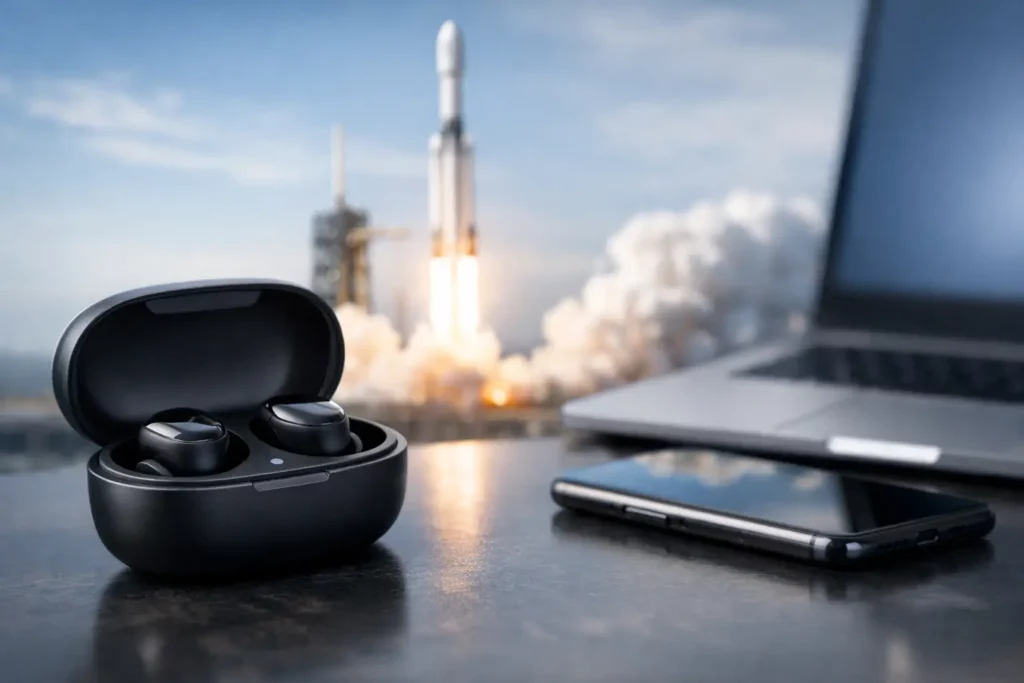
A new pair of earbuds can land with almost no warning now – teaser on Monday, preorder on Wednesday, shipping by Friday. That pace is exactly why wireless earbuds launch news keeps pulling so much attention. For buyers, it is not just about another audio accessory hitting the market. It is about figuring out which launches actually move the needle on sound, noise canceling, battery life, comfort, and everyday usefulness.
The current launch cycle feels especially crowded. Big phone brands want tighter ecosystem lock-in, audio-first companies are pushing premium tuning, and value brands keep undercutting everyone on price. That means every new release looks exciting at first glance, but the real story is usually in the details manufacturers highlight – and the ones they barely mention.
Why wireless earbuds launch news matters right now
Wireless earbuds have moved past being a simple phone add-on. For a lot of people, they sit in the same daily-use category as a smartwatch or laptop. They are used for work calls, gym sessions, commuting, gaming on mobile devices, and late-night streaming, all in the same week.
That broad use case is changing how launches are framed. Brands are no longer selling just sound quality. They are selling call clarity, AI-backed noise reduction, spatial audio tricks, low-latency gaming modes, and better switching across phones, tablets, and PCs. When a launch announcement drops, the question is less “do these play music well?” and more “what part of my setup are these supposed to replace or improve?”
That is also why fast-moving wireless earbuds launch news is worth watching even if you are not buying immediately. New releases tend to reset pricing across the category. A premium model launch can push last-gen earbuds into much more attractive sale territory, while budget launches often pressure midrange competitors to add features they used to reserve for higher tiers.
The biggest themes showing up in new launches
The headline feature in most recent earbud announcements is still active noise canceling, but the battle has shifted. Basic ANC is no longer enough to stand out. Brands are now promising adaptive ANC that changes based on surroundings, ear shape, or fit. That sounds great in a press release, but results can vary a lot. Strong software tuning helps, though a bad seal can still wreck the whole experience.
Battery life is another launch talking point that deserves a closer look. Companies love quoting huge totals with the charging case included, but the more useful number is per-charge listening time with ANC turned on. That is where the gap between marketing and reality often shows up. If a new pair promises massive endurance but only reaches those numbers with features disabled, it is not really a leap forward for most users.
Microphone performance has become a much bigger selling point too. Earbuds used to be judged mostly on music playback, but hybrid work and constant voice chat changed that. New launches increasingly focus on beamforming mics, voice isolation, and wind noise reduction. For some buyers, especially people taking calls on the move, that matters more than whether bass response is a little richer.
Fit and comfort are getting more attention as well, which is overdue. A lot of feature-packed earbuds are still unpleasant after an hour or two. Smaller stems, lighter housings, and extra ear tip options can matter more than flashy codec support. If a launch spends time talking about ergonomics, that is usually a good sign the company knows comfort is part of the product, not an afterthought.
What brands are trying to win on
Apple, Samsung, Google, and other major ecosystem players still have a clear advantage when they launch new earbuds. Their best trick is convenience. Fast pairing, device switching, head tracking, and settings integration make these products feel easier to live with if you already use that brand’s phone or tablet.
The trade-off is flexibility. Some of the smartest features stay locked to one platform, which can make premium earbuds feel oddly limited if you move between Android, iPhone, Windows, and console gaming. A launch can look impressive on stage, then feel less compelling once you realize half the experience depends on staying inside one hardware family.
Audio-focused brands take a different route. They tend to lean on driver design, codec support, tuning partnerships, and more customizable sound profiles. That can pay off for listeners who actually care about music quality, but it also comes with its own compromise. The app experience, touch controls, or multipoint switching may not feel as polished as what the biggest mobile brands offer.
Then there are budget-focused releases, which have become a serious force in the category. It is not unusual now to see sub-$100 earbuds launch with ANC, transparency mode, wear detection, and wireless charging. The catch is consistency. One feature may be surprisingly strong, while another feels half-finished. Cheap launches can be great value, but they are still the area where buyers benefit most from patience.
How to read wireless earbuds launch news without getting burned
Launch headlines are built to create urgency, so it helps to slow down and look for a few specific things. First, check whether the new model is actually replacing an older product or just filling a weird gap in the lineup. Some launches exist mostly to hit a price point, not to push the category forward.
Second, pay attention to what is missing from the announcement. If a company talks at length about design and AI features but says almost nothing about codecs, IP rating, latency, or battery life with ANC enabled, that omission can tell you plenty. Earbuds are one of those product categories where silence around core specs is often meaningful.
Third, watch the launch price against the competition, not in isolation. A $179 pair might sound reasonable until you compare it with discounted premium earbuds from six months ago that offer better tuning, stronger ANC, or a more mature app. Fresh hardware does not automatically mean better buy.
That is especially true during big seasonal sales windows. Some of the most exciting earbud launches arrive into a market where last-gen models are aggressively discounted. For readers keeping an eye on TechLifestyler-style rapid news updates, that context matters almost as much as the announcement itself.
Features that are gaining momentum
Low-latency modes are starting to get more attention in earbud launch coverage, and that makes sense. Mobile gaming, handheld PCs, and cloud streaming have given brands a reason to talk directly to players instead of just commuters. The best gaming-friendly earbuds are not replacing full headsets anytime soon, but they are becoming a realistic option for casual play and portable setups.
Health and fitness features could also show up more often in future launches. Some brands are experimenting with posture prompts, hearing tests, adaptive audio safety features, and deeper wellness tracking. Whether those tools become genuinely useful or just another app tab nobody opens will depend on execution.
AI is the other obvious trend, though this is where launch language gets fuzzy fast. Real-time translation, better call enhancement, and smarter noise filtering can be useful. On the other hand, not every earbud needs an AI label slapped on it. A lot of upcoming releases will probably use that branding to dress up features that are really just software refinements.
What buyers should expect next
The next wave of launches will likely keep pushing the same three pressure points: better ANC, better battery life, and better integration with the rest of your devices. The interesting part is how brands prioritize them. Some will chase premium pricing with advanced software features. Others will try to win by bringing formerly high-end tools into cheaper models.
That creates a market where there is no single best pair for everyone. If you travel a lot, strong ANC and comfort may outweigh everything else. If you bounce between work calls and music, mic quality and multipoint could matter more. If you mostly game and stream on a phone or handheld, latency and connection stability deserve more attention than audiophile claims.
So when the next wireless earbuds launch news hits your feed, the smart move is not to ask whether the new release looks cool. Ask what problem it actually solves, what trade-offs come with it, and whether the previous generation just became the better deal. In a category this crowded, timing your buy is often just as important as picking the right earbuds.




1 thought on “Wireless Earbuds Launch News to Watch”