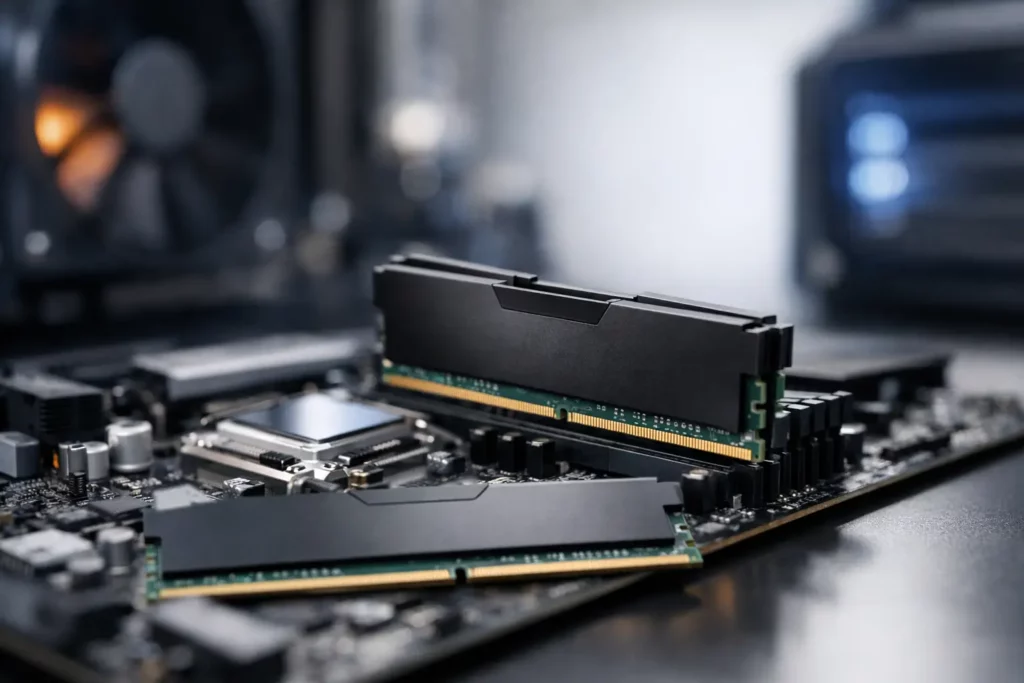
If you have been tracking ddr5 memory launch news lately, the story is no longer just about raw speed bragging rights. The bigger shift is that DDR5 has moved from early-adopter territory into the part of the market where mainstream gamers, creators, and PC upgraders can actually justify the jump. That makes every new kit launch more relevant than it was a year or two ago.
For PC buyers, this wave of launches matters because DDR5 is finally starting to feel normal instead of premium-for-the-sake-of-premium. New memory kits are showing up with higher frequencies, tighter timings, larger capacities, and better EXPO and XMP support, while pricing keeps drifting toward something much easier to stomach. That does not mean every fresh launch is a must-buy. It does mean the gap between good-enough and high-end is getting more interesting.
Why DDR5 memory launch news suddenly feels bigger
The early DDR5 era had a pretty familiar problem for anyone who follows PC hardware. Speeds looked impressive on a spec sheet, but the real-world value was uneven, motherboard compatibility could be messy, and launch pricing made a lot of kits feel more like showcase parts than smart upgrades. Fast forward to now, and memory makers are launching products into a much more mature ecosystem.
That changes the stakes. A new DDR5 launch in 2026 is not just aimed at benchmark chasers with unlimited budgets. It is targeting people building AM5 gaming rigs, Intel-based productivity systems, compact desktops, and even aesthetic-first setups where RGB still matters almost as much as latency. The platform support is broader, BIOS tuning is less painful than it used to be, and there are more options for buyers who want performance without overpaying.
The result is a more crowded market, but also a more useful one. Launches are no longer just about who can post the biggest MT/s number. They are increasingly about balance – speed, timing, thermals, compatibility, and price.
What the latest DDR5 launches are actually pushing
Most new DDR5 announcements keep circling the same pressure points, but that is because those are the areas shoppers now care about. Speed still leads the headline. Brands love pushing 7200MT/s, 8000MT/s, and beyond, especially for enthusiast Intel systems. But capacity has become just as important, particularly for users editing video, multitasking heavily, or building a machine expected to last several years.
Another big trend is better tuned kits for AMD and Intel separately. That matters more than some buyers realize. A memory kit that looks amazing on paper can end up being a hassle if its sweet spot does not line up with your motherboard and CPU. Recent launches have done a better job of spelling out whether they are built around AMD EXPO or Intel XMP, which makes buying less of a guessing game.
Thermal design is also getting more attention. That might sound like marketing fluff, but there is a practical side to it. Higher-speed DDR5 kits can generate more heat, and as memory makers chase more aggressive specs, heat spreaders are becoming part of the performance conversation rather than just the visual identity. In smaller cases or tightly packed systems, that can matter.
Then there is styling. Yes, RGB memory is still everywhere. But cleaner low-profile kits are also getting more love, especially for users dealing with large air coolers or aiming for understated builds. In other words, DDR5 launch news is not just about speed anymore. It is about fitting into the broader PC lifestyle that mixes gaming, work, and design preferences.
The price shift is the real story
The most important detail in current ddr5 memory launch news is not always printed in the product headline. It is the pricing pressure happening in the background. As more kits hit the market and DDR5 becomes standard across newer platforms, buyers are seeing better value at capacities that used to feel expensive.
That changes upgrade math in a big way. A 32GB DDR5 kit is increasingly the default recommendation for gaming and general productivity builds, rather than the aspirational option. For users who keep dozens of browser tabs open, jump between work apps, stream, or use heavier creative tools, 48GB and 64GB configurations are also starting to feel less niche.
The catch is that value still depends on your use case. Chasing ultra-high-frequency kits can get expensive fast, and the frame rate gains in many games may be smaller than the marketing suggests. If your budget is tight, the smartest move is often buying a well-priced kit in the platform sweet spot rather than stretching for the highest speed tier. That is not a flashy answer, but it is usually the right one.
Who should care about new DDR5 launches
If you are building a fresh PC, DDR5 launch cycles matter because they create choice and price movement at the same time. Even if you do not buy the newest kit, new releases tend to push older inventory into more attractive pricing. That is often where the best deals live.
If you are already on DDR5, the value question is trickier. Jumping from a decent midrange kit to a newer, faster one may not transform your system unless your workload is especially memory-sensitive. Competitive players chasing every last bit of performance, heavy creators, and benchmark enthusiasts may see enough upside to care. Everyone else should be realistic.
Laptop buyers are in a different spot. Depending on the system, memory may be soldered, partially upgradeable, or completely inaccessible. So while launch news can reflect where the market is moving, it does not always translate into a direct buying decision the way it does for desktop users.
What gamers should watch in DDR5 memory launch news
For gaming-focused readers, the key is not getting distracted by extreme numbers without context. New launches with very high speeds can look exciting, and sometimes they are. But game performance depends on the full platform – CPU, GPU, motherboard, memory tuning, and even the resolution you play at.
In CPU-limited scenarios, faster memory can help. That is especially true in some esports titles and certain simulation-heavy games. But once you move into higher resolutions or more GPU-bound settings, the difference between two DDR5 kits can shrink quickly. That means smart DDR5 shopping is less about buying the absolute fastest option and more about buying a kit that matches your platform well.
Capacity is also becoming a bigger talking point for modern gaming setups. Between newer games, launchers, background apps, streaming tools, and browser tabs, 16GB is looking less comfortable than it used to. That does not make it obsolete overnight, but it does make 32GB feel like the more future-friendly baseline for many buyers.
What to expect next
The next round of DDR5 launches will probably keep pushing familiar themes: faster kits, larger modules, and more refined compatibility messaging. That may sound predictable, but predictable is not bad when it means the platform is maturing. Buyers benefit when memory stops feeling experimental and starts feeling dependable.
We should also expect brands to keep carving the market into tighter segments. Some launches will target pure enthusiasts who want maximum speed no matter the price. Others will go after the mainstream sweet spot with cleaner pricing, moderate latency, and easier one-click tuning. That middle category is where the most meaningful competition is likely to happen.
There is also a broader timing issue worth watching. Memory launches do not happen in isolation. They land alongside new CPUs, motherboard refreshes, shifting GPU budgets, and changing consumer spending patterns. A great DDR5 kit can still struggle to stand out if buyers are putting more of their budget into graphics cards or waiting on a platform refresh. So the best way to read launch news is not just to look at the memory itself, but to see where it fits in the larger PC market.
For readers skimming headlines between game news, hardware drops, and the usual wave of tech updates, that is the takeaway. DDR5 is not the shiny new thing anymore. It is becoming the normal thing, and that is exactly why these launches matter more now than when the specs first started flying. If you are planning a build, the smartest move is to watch for the kits that hit the sweet spot instead of the ones that just chase the loudest number.




More Stories
Gaming Showcase Recap Today: Biggest Reveals
OLED vs Mini LED Monitors: Which Wins?
Open Back vs Closed Headphones Explained