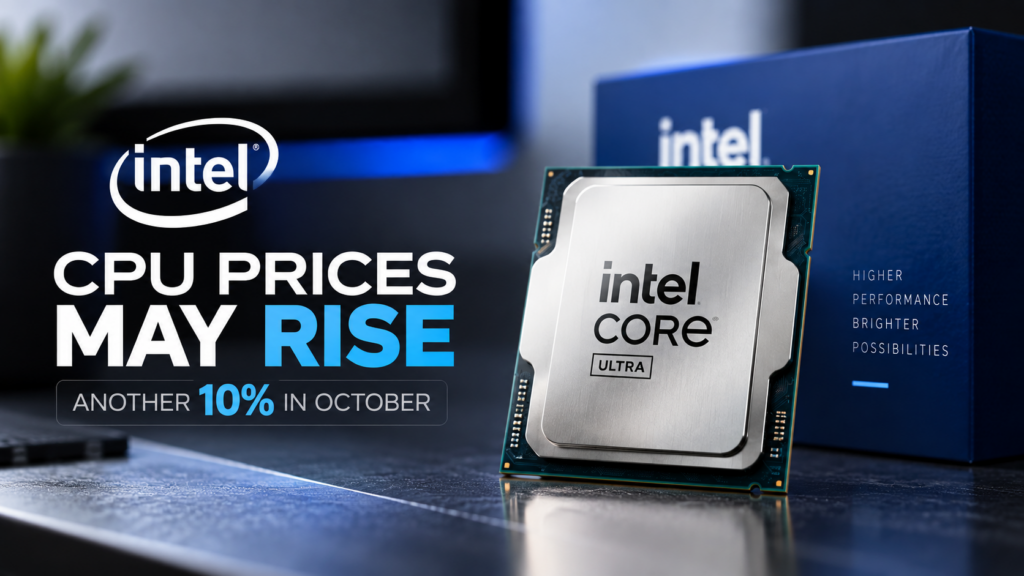
Intel could be preparing another price increase for its PC processors, with a new report claiming that CPU prices may rise by around 10% in October.
According to DIGITIMES, the possible increase would be another step in Intel’s efforts to improve its financial performance. The report does not make it clear whether the higher prices would apply only to desktop processors or also include Intel’s mobile CPU lineup.
The move comes after several price increases made by Intel over the past year. This time, however, the reported goal appears to be improving profit margins rather than simply trying to win more market share.
Intel Reportedly Targets Better CPU Margins
Industry sources cited by DIGITIMES say Intel is focusing on gross margin improvement as it deals with a changing PC market.
Global PC shipments are expected to fall from around 260 million units to roughly 250 million in 2027. At the same time, higher component and product prices could continue to push up the cost of PCs.
Despite the expected decline in total shipments, Intel could still improve its position if it manages to increase CPU shipments. DIGITIMES estimates that reaching close to 200 million CPU shipments could help Intel recover to around 78% market share.
That would be a major improvement, but it depends on Intel being able to increase shipments while also maintaining healthier margins.
Intel Could Drop Its Low Margin Small Core Chips
The report also points to a possible change in Intel’s product strategy.
Intel is reportedly considering ending its Small Core product line because of its low margins. If that happens, competitors such as Qualcomm and MediaTek could get a bigger opportunity in industrial PCs and IoT devices.
Intel has traditionally held a strong position in these areas, so leaving some lower-margin products behind could help the company focus its resources on more profitable segments.
However, it would also create room for rival chipmakers to expand their presence in markets where Intel has been well established.
More Intel Job Cuts Could Be Coming
Intel’s workforce could also become smaller.
Sources cited by DIGITIMES suggest the company may cut another 5% to 10% of its employees. Intel’s reported headcount is currently around 75,000, although the company is also expected to continue hiring in some areas.
The possible cuts would follow earlier reductions across parts of Intel’s business, including its Data Center and AI operations.
Interestingly, the same sources reportedly believe Intel’s current workforce size is already reasonable, suggesting that any future reductions could be more focused on specific teams or business areas rather than a broad restructuring.
Server CPUs Are Creating Another Challenge
Intel is also facing a capacity problem as it works to balance its server and PC businesses.
DIGITIMES reports that Intel is prioritizing its own manufacturing plants for server processors because these products generally offer better margins than chips made through external manufacturing.
The downside is that this could leave less manufacturing capacity available for PC processors.
Intel may therefore need to send more server CPU production to TSMC if it wants to increase server output without putting additional pressure on its own factories.
Intel’s 18A and 14A Processes Remain Important
This makes Intel’s upcoming manufacturing technologies even more important.
The company’s 18A process has been under close industry attention as Intel works to improve yields and expand production. At the same time, development of the newer 14A process will be important for Intel’s longer-term manufacturing plans.
If Intel can improve its own manufacturing efficiency while moving more profitable products through its fabs, it could have more flexibility to handle demand from both the server and PC markets.
What This Means for PC Buyers
If the reported Intel CPU price increase goes ahead in October, PC buyers could face higher processor prices later this year.
The actual impact will depend on which CPU families are affected and how retailers adjust their pricing. It could also influence complete PC prices if system builders pass the additional processor cost on to customers.
For Intel, though, the bigger issue is not simply charging more for CPUs. The company needs to balance pricing, shipment volume, manufacturing capacity and product costs while competing in a market that is becoming increasingly difficult.
For now, the October increase remains a reported plan rather than a confirmed company announcement.






1 thought on “Intel May Raise CPU Prices Again as It Targets Stronger Margins”