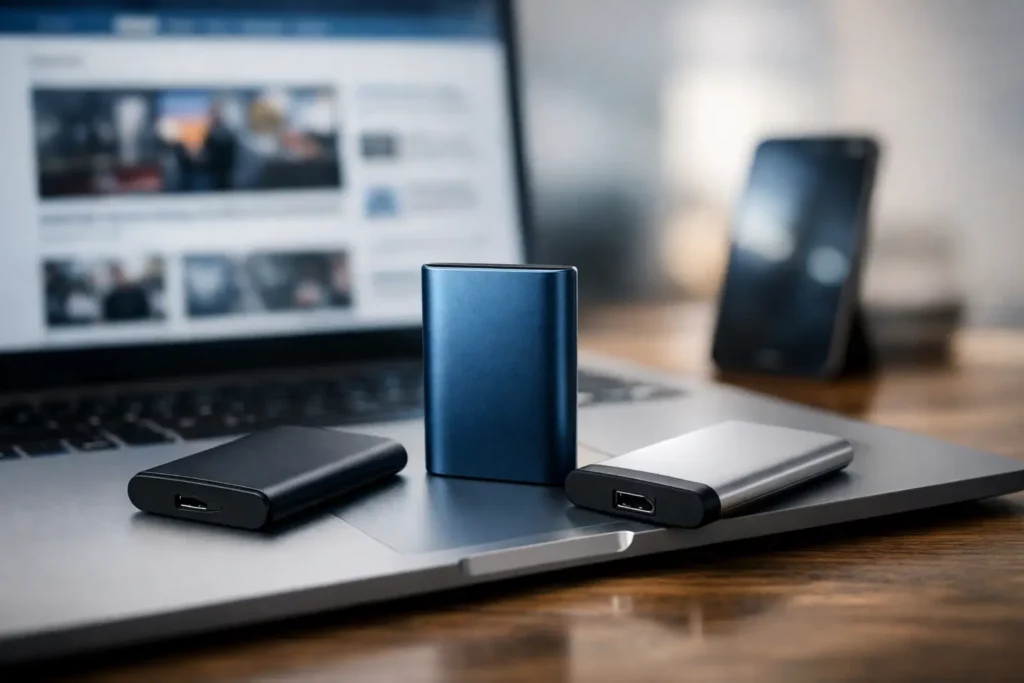
Portable SSD release news has been unusually busy lately, and not just because brands want another flashy spec sheet. The latest launches are pushing faster USB standards, smaller enclosures, and more creator-friendly features at the same time. If you use one drive for game installs, large media files, and backup duty, this wave of releases is worth watching.
For a category that used to feel pretty simple, portable SSDs are suddenly splitting into clear lanes. Some are chasing raw speed with USB4 and premium pricing. Others are leaning into rugged designs, thermal control, and broad compatibility with phones, consoles, and laptops. That makes the latest announcements more useful than they first appear, especially for buyers trying to avoid overspending on speed they will never actually use.
Why portable SSD release news matters now
A year or two ago, most mainstream portable SSD updates were incremental. You got a little more speed, maybe a tougher shell, and a refreshed color option. Recent product announcements look more aggressive because the market is changing from both ends.
On the high end, USB4 is becoming a bigger part of the conversation. That matters because more laptops and premium handheld devices can finally take advantage of higher bandwidth external storage. On the practical end, cheaper and denser flash is helping manufacturers ship higher capacities in smaller bodies, which is exactly what gamers, creators, and hybrid workers have been asking for.
There is also a usability angle that is easy to miss. External drives are no longer just backup accessories you toss in a drawer. They are active parts of daily setups. People are editing video from them, moving giant game libraries between machines, capturing footage directly to them, and using them as portable project hubs. That shift is why new releases are talking more about sustained performance, heat, drop resistance, and platform support instead of just maximum read speed.
The big trends in portable SSD release news
The clearest trend is a stronger push toward speed tiers. Not every new drive is trying to be the fastest option anymore, and that is probably a good thing. Brands are getting more explicit about whether a product is for casual file transfers, regular content work, or premium workflows.
USB4 is becoming a real selling point
The most eye-catching launches are portable SSDs built around USB4. On paper, these models can deliver a huge jump over older USB 3.2 Gen 2 drives, and that makes them attractive for editors, photographers, and anyone moving massive files every day. It also helps future-proof a purchase if your current setup already includes a newer laptop or tablet with the right port support.
The trade-off is simple. USB4 drives cost more, and you only get the full benefit if the host device supports the same standard well. Plug one into an older machine and you may end up paying premium money for pretty ordinary real-world performance. For a lot of shoppers, that makes midrange portable SSD launches more relevant than the flagship headlines.
Rugged designs are moving from niche to mainstream
Another pattern in portable ssd release news is that durability is no longer treated like a specialty feature. More brands are shipping drives with reinforced casings, water and dust resistance claims, and better drop protection. That is a smart move because portable drives live rough lives. They get tossed into backpacks, plugged into crowded desk setups, and carried between home, office, and travel.
Not all rugged claims are equal, though. A tougher shell helps, but buyers should still pay attention to heat behavior and connector quality. A drive that survives a drop but throttles hard during long transfers is only solving half the problem.
Higher capacities are getting easier to justify
Capacity jumps used to feel painful in this category. Once you went above 1TB, prices could spike fast. Newer releases are making 2TB and 4TB models look more practical, especially for people juggling game captures, large creative libraries, or expanding console storage.
That said, capacity still changes the value equation. Some new models look appealing at 1TB and become much harder to recommend at 4TB, where pricing starts colliding with internal SSD upgrades or larger desktop-class storage options. The right move depends on whether you need true portability or just more space.
What buyers should actually look for in new releases
The headline speed is still the first thing brands promote, but it should not be the first thing most people care about. Sustained performance matters more than peak numbers if you are copying large folders, editing directly from the drive, or recording long sessions. Thermal management matters too, because compact enclosures can get hot fast.
Compatibility is another big one. A new portable SSD may support top-end speeds on a recent PC but fall back sharply on older systems, game consoles, or some mobile devices. If your setup includes a PlayStation, a MacBook, a Windows laptop, and a phone, check the least capable device in the chain before getting sold on the fastest spec on the box.
The same goes for cables and formatting. Some new drives include short cables aimed at laptops and desktops, but they may be awkward for certain mobile workflows. Others arrive formatted in a way that is not ideal for every platform. None of that is a dealbreaker, but it can turn a supposedly simple purchase into extra setup work.
Who the latest portable SSD launches are really for
If you mostly need a drive for documents, light backups, and occasional transfers, a mainstream release with solid thermals and a fair price is usually the smarter buy. You probably do not need USB4. You need reliability, portability, and enough capacity to avoid constant file management.
If you are a gamer, the picture gets more specific. Portable SSDs can be great for storing large libraries, moving installs between systems, and handling captured footage. But not every console or handheld benefits equally from the fastest new models. In some cases, spending extra on a flagship portable drive will not noticeably change your day-to-day experience.
Creators and production-heavy users are where premium launches make the most sense. If you edit large video projects, work with RAW image sets, or need fast scratch storage on the go, newer high-speed external SSDs can save real time. That is where sustained writes, heat control, and higher-end interface support justify the price.
What this means for the market over the next few months
Expect brands to keep separating portable SSD lines instead of trying to make one drive do everything. That likely means more clear budget, midrange, and flagship options, with design language and marketing tuned for each use case. It also means product pages may get more complicated as manufacturers try to explain USB standards without losing mainstream shoppers.
There is a good chance we will also see more crossover positioning with mobile creators and handheld gaming users. Portable SSDs fit neatly into both worlds. They solve storage headaches without opening up a device, and they travel well. As more people use one setup for work files, game captures, and media libraries, that flexibility becomes a bigger selling point.
Price pressure will be the other thing to watch. New launches often arrive with premium pricing, but portable storage gets more interesting once discounts kick in. Some of the best buying windows happen a little after release, when early hype settles and brands start fighting harder on value.
Should you buy now or wait for the next wave?
If your current drive is slow, full, or unreliable, the latest portable SSD announcements are good news because there are more genuinely different options on the table. You can now choose between affordable everyday models, tougher travel-ready drives, and high-speed premium units without every product blurring together.
If you already own a decent recent-gen portable SSD, waiting can still make sense. USB4 support is growing, but it is not universal enough that everyone should rush to upgrade. A lot depends on your hardware, your file sizes, and whether your current drive is actually holding you back.
The smartest way to read portable ssd release news right now is not to chase the biggest benchmark. It is to watch which new models match how people actually use their gear. The best portable drive is the one that fits your setup today and still feels like the right call when your next laptop, console, or camera shows up.



2 thoughts on “Portable SSD Release News to Watch Right Now”