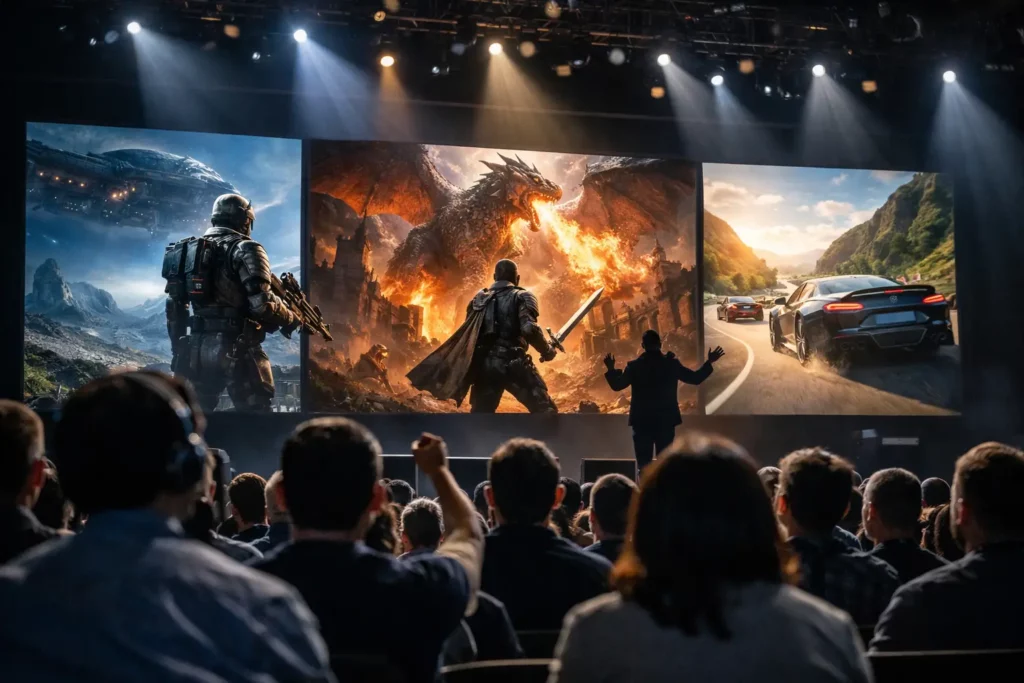
If you missed the livestreams and only want the good stuff, this gaming showcase recap today cuts through the filler fast. The latest round of presentations brought a familiar mix of cinematic reveals, release date teases, gameplay slices, and a few genuine crowd-pleasers, with publishers clearly trying to lock in attention before the holiday slate gets crowded.
The big takeaway was momentum. Not every trailer landed, and not every project showed enough to justify the hype, but there was a steady cadence of announcements across PS5, Xbox, PC, and Switch. For players who bounce between console gaming, handhelds, and PC upgrades, it felt like a packed feed rather than a single-platform flex.
Gaming showcase recap today: what stood out
The strongest reveals were the ones that showed actual gameplay early and kept the pitch simple. Big-budget action games still dominated screen time, but a few smaller titles made a stronger impression because they were clear about what players would actually be doing. That matters more than another moody teaser with no release target.
Several publishers leaned hard on existing franchises, which is not surprising. Sequels, remakes, and franchise expansions remain the safest bet when marketing costs are high and attention spans are short. The trade-off is obvious, though. Familiar brands get instant traction, but they also raise the bar. If a reveal looks too close to the last game, the excitement cools off fast.
A couple of standout moments came from games that finally attached a real launch window after long stretches of silence. That kind of update lands better than vague reassurance. Fans can handle delays. What wears them out is the endless cycle of logos, promises, and no meaningful follow-up.
The biggest reveals and trailers
Action RPGs had a strong showing, with multiple trailers pushing darker fantasy settings, large-scale boss fights, and co-op hooks. Some of these looked polished enough to move from wishlist material to real day-one contenders, especially on PC and current-gen consoles. Others still feel early, with edited footage doing a lot of heavy lifting.
Shooter fans also got a decent spread of announcements. There were arena-style throwbacks, tactical team-based projects, and at least one slick sci-fi reveal clearly built to spark comparisons with bigger live-service names. That is where things get tricky. A flashy reveal can win the night, but live-service shooters live or die months later based on matchmaking, monetization, and post-launch support.
The horror category stayed busy too. Publishers know how well horror trailers play in a showcase format. Tight editing, strong audio cues, and one unsettling creature design can generate more social buzz than a ten-minute systems demo. The challenge is whether those games still look compelling once the jump cuts are gone.
Indie announcements quietly did some of the best work of the day. A few smaller games delivered sharper hooks than the bigger-budget titles simply because they were specific. One had a stylish traversal system. Another sold its world in under two minutes. When a game can explain itself that quickly, it has a real shot at breaking through.
Release dates, windows, and the usual ambiguity
Not every announcement came with a firm date, and that part felt very familiar. Publishers love saying a game is coming in 2025 or 2026, but broad windows do not carry the same weight they used to. Players have seen too many projects drift.
Still, there were enough concrete dates to make the showcases feel productive. A handful of titles now have clear launch months, pre-order beats are starting to line up, and platform plans are becoming easier to track. That matters if you are deciding where to spend money across games, accessories, and hardware this year.
Cross-platform support was another recurring theme. More announcements confirmed releases on PS5, Xbox Series X|S, and PC at the same time, which is good news for players who do not want to wait through staggered rollouts. Switch support was more selective, and in some cases that likely reflects performance constraints rather than strategy.
Hardware and platform signals behind the showcases
Even when these events are about games first, the hardware story is never far away. Some trailers were clearly built to show off higher frame rates, better lighting, faster loading, or handheld portability. You could almost see the platform messaging tucked inside the reveal pacing.
For PC players, the showcase cycle now doubles as a reminder that system requirements are only heading one way. Several visually ambitious games looked like they will push GPUs harder than last year’s lineup, especially if developers aim for advanced ray tracing or large open environments. That does not mean every game needs a top-tier rig, but it does mean a lot of players will be checking upgrade paths sooner rather than later.
Console players got a slightly different message. Stability, ecosystem value, and subscription placement continue to shape how announcements are framed. If a title is heading into a game subscription service on day one, that changes the value math instantly. If it is exclusive, timed or otherwise, that still matters, even in an era where platform walls are softer than they used to be.
Winners, misses, and what felt overhyped
The winners were the games that respected the audience’s time. Show real gameplay, explain the core loop, offer a release target, and get out. That formula is not flashy, but it works. It also fits the current mood better than oversized cinematic reveals that leave people guessing.
The weaker segments mostly came from projects that asked for excitement without giving enough back. Teasers with no mechanics, brand announcements with no footage, and slow-paced developer banter all dragged the energy. In a crowded presentation, dead air stands out more than ever.
There were also a few trailers that looked polished but suspiciously curated. That does not mean the games are in trouble. It just means viewers are smarter now. Players want to know what is gameplay, what is target footage, and what is years away from shipping. If a reveal feels too controlled, the reaction online turns cautious fast.
What this means for the rest of the year
This gaming showcase recap today points to a stacked release calendar, but also a noisy one. There are clearly enough major games to keep the second half of the year busy, yet not every reveal will hold momentum once previews, performance details, and pricing enter the conversation.
That is especially true for games launching near each other. A strong trailer can get a title onto everyone’s radar, but release timing still decides a lot. A mid-sized game can disappear if it drops next to a massive franchise sequel or a breakout multiplayer release. On the flip side, a well-timed launch in a quieter month can turn a modest reveal into a real success story.
Expect more release date reshuffling too. Showcase season often creates the impression that the road map is set, but it rarely stays that clean. Delays, beta feedback, certification issues, and marketing pivots can all move the board quickly.
Why the audience reaction matters more now
The immediate online reaction is becoming part of the event itself. A reveal does not end when the trailer cuts off. It keeps going through clips, memes, side-by-side comparisons, and frame-by-frame breakdowns across social platforms. That can help a game catch fire, or it can expose weak points within minutes.
For publishers, that means confidence matters. If the footage is strong, the community will amplify it. If it is vague, overly cinematic, or hiding too much, skepticism arrives just as fast. That pressure is probably why some of the best-received reveals were also the most straightforward.
For readers trying to keep up without watching every event live, that is where a site like TechLifestyler fits naturally. The volume is high, the news cycle moves fast, and not every announcement deserves equal weight. The real value is knowing which reveals actually changed the picture and which ones were just there to fill a reel.
The next wave of updates will tell the real story. Once hands-on previews, performance targets, and final release dates start landing, we will know which showcase winners had substance behind the sizzle. Until then, the smartest move is simple: keep the hype, but keep a little skepticism with it.


More Stories
Destiny 2 is dead, but still crushing Marathon on Steam
Samsung Unveils Fast New P9 and P7 USB4 Portable SSDs
iPhone 17 Still Looks Like a Great Buy Before iPhone 18 Arrives