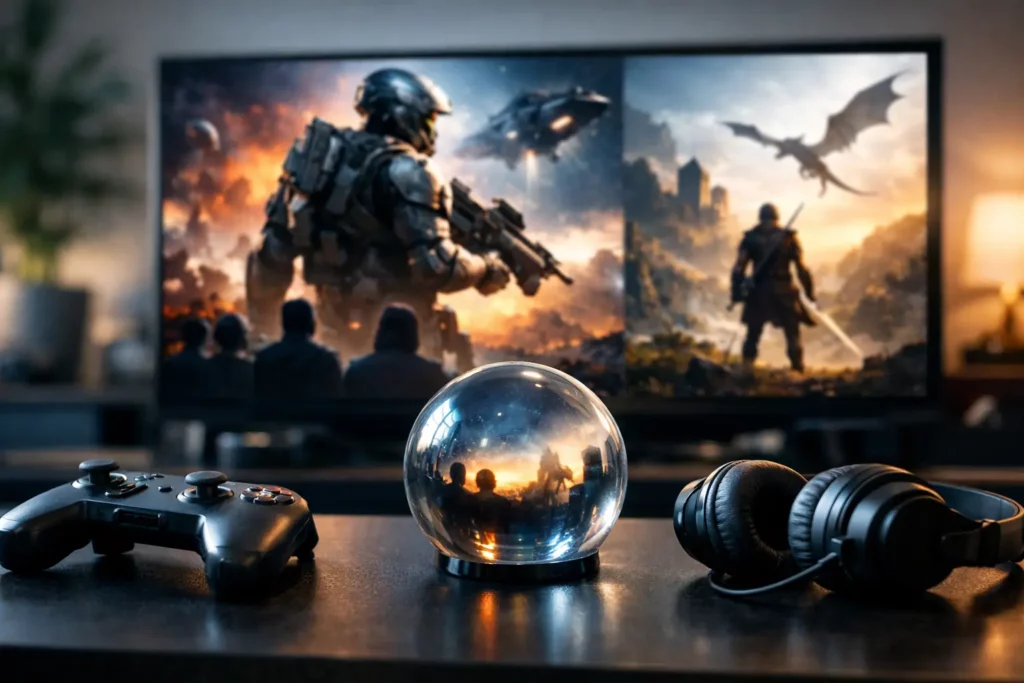
If your group chat is already trading predictions for the next big reveal, upcoming game trailers 2026 are going to keep that energy high all year. Between platform showcases, publisher events, and the now-routine surprise drop on social, 2026 looks set to be another packed trailer cycle with big stakes for players, studios, and hardware makers alike.
For gaming fans, trailers are no longer just marketing beats. They shape wish lists, drive preorders, move console conversations, and can even change how people think about a studio overnight. One strong two-minute trailer can do more for momentum than months of vague updates, while one weak showing can trigger instant skepticism.
That makes 2026 especially interesting. The industry is in a strange but exciting spot: blockbuster development timelines are longer, live-service bets are being questioned harder, and players have gotten much better at spotting the difference between a cinematic mood piece and actual gameplay. Hype still works, but audiences want receipts faster now.
Why upcoming game trailers 2026 matter more than usual
This year is likely to be shaped by pressure from both sides. Publishers need cleaner messaging because budgets are high and patience is lower. Players want clearer proof of progress after several years of delays, shifting roadmaps, and release windows that felt more like placeholders than plans.
That changes what a good trailer looks like. Pure CGI can still land if the brand is strong enough, but it usually works best when it is paired with a real release target or gameplay follow-up. If a reveal shows tone without mechanics, people will immediately ask the same question: what are we actually playing?
There is also the hardware angle. Big trailers now do double duty across console, PC, handheld, and cloud conversations. If a title debuts with sharp performance messaging, ultrawide support, ray tracing, handheld optimization, or cross-save confirmation, that can matter almost as much as the reveal itself for a tech-focused audience.
Where the biggest 2026 trailer drops will likely happen
The release calendar is crowded, but the real action will center around a few familiar windows. Early-year platform presentations usually set expectations, while summer showcase season remains the biggest traffic spike for reveals. Late-year events often bring the final surprise announcements, expanded gameplay cuts, and release date lock-ins.
Summer showcases still own the spotlight
Even with publishers experimenting with standalone streams, summer remains the most efficient place to drop a major trailer. Attention is concentrated, reaction cycles are faster, and players are already in discovery mode. A trailer that lands during that stretch gets compared instantly with everything else on the slate, which is risky, but the upside is huge.
For 2026, expect major publishers to lean into tightly edited reveals rather than bloated presentations. Audiences are quicker to bounce now. If a trailer cannot make its point fast, it gets clipped, memed, and forgotten.
First-party events will be crucial
Platform holders still have the cleanest stage for prestige reveals. If a company wants to frame a game as a generation-defining exclusive, debuting it in a first-party event still carries extra weight. It signals confidence and usually comes with stronger production values, deeper breakdowns, and immediate ecosystem messaging.
That matters because players are reading between the lines. A game shown at a flagship event feels closer, bigger, and more strategically important than something quietly posted on a random Tuesday.
Social-first trailer drops are not going away
The surprise trailer post has become part of the playbook. Studios know they do not always need a giant event to dominate the news cycle if the brand is strong enough. One clean announcement post, a sharp teaser, and a coordinated creator push can generate a full day of coverage.
The trade-off is context. Surprise drops can hit hard, but they also leave less room to explain systems, platforms, and timing. That is fine for a known franchise. It is tougher for a new IP that needs more than vibes to get people on board.
What players should watch for in upcoming game trailers 2026
The smartest way to watch a trailer now is with a little skepticism and a little pattern recognition. Not every reveal is trying to answer the same question.
Cinematic reveal or real gameplay?
This is still the first filter. A cinematic trailer can be great for setting tone, world, and character direction, but it should not be mistaken for proof of what the game feels like. If a publisher avoids UI, combat loops, traversal, or player perspective, that usually means the project is still early or the messaging team is buying time.
That does not make the trailer bad. It just changes how seriously you should take near-term release hopes.
Release window language matters
The wording is usually doing more work than the visuals. “Coming 2026” is broad. “Launching spring 2026” is stronger. A specific date is strongest, but even that is not bulletproof if the game has already had a rough development story.
A lot of trailers will aim for confidence without overcommitting. That is understandable. Still, players have learned to rank announcement credibility based on how precise the publisher is willing to be.
Platform details tell their own story
Watch the fine print. Day-one PC support, cross-platform launch, handheld compatibility, performance modes, and subscription availability all change the value of a reveal. For many readers, those details answer the practical question immediately: where am I actually going to play this?
In a broader tech lifestyle context, this is where gaming and hardware coverage really overlap. A trailer might push excitement for a title, but it can also spark renewed interest in GPUs, SSD upgrades, controllers, monitors, and portable gaming gear.
The trailer trends likely to define 2026
One clear trend is shorter, sharper editing. Publishers have seen that audiences react better to trailers with obvious gameplay slices than long cinematic monologues. Expect more reveals to front-load action, mechanics, and release info in the first minute.
Another trend is the push for “gameplay reveal” labels that actually mean something. Players have become allergic to misleading wording, and studios know the backlash lands fast. The safest move is to be direct: show what the player does, how the world responds, and why the game stands apart.
There is also growing pressure to prove technical stability earlier. After several high-profile launches that arrived with performance complaints, a polished trailer alone does not fully reassure anyone. If a publisher wants trust, it may need follow-up footage, creator previews, or hands-on impressions close behind the reveal.
And yes, nostalgia will still be a major weapon. Remakes, reboots, and legacy franchise returns are not slowing down. But 2026 trailers will need more than recognition value. Players love a comeback, but they also want proof that an older brand is bringing modern ideas instead of just polishing memory.
Why some 2026 trailers will land and others will flop
The trailers that hit hardest usually do three things well: they establish identity fast, show enough real game to feel credible, and leave viewers with one memorable hook. That hook could be a mechanic, a setting twist, a release date, or a visual flex that makes social clips travel.
The ones that flop often feel interchangeable. If the trailer leans on vague narration, generic orchestral swells, and quick cuts that hide what the player actually does, people notice. The market is too crowded for mystery without payoff.
It also depends on timing. A decent trailer can get buried if it drops next to a blockbuster reveal or a major hardware announcement. On the flip side, a smaller title can overperform if it shows clear gameplay during a slower news window and gives players something specific to latch onto.
How to keep expectations in check
The healthiest way to approach upcoming game trailers 2026 is to treat them as signals, not promises. A reveal can tell you that a project is real, what tone it wants to sell, and how confident a publisher feels right now. It cannot guarantee smooth development, launch quality, or even a final release window.
That is not cynicism. It is just a better way to read the modern game business. Trailers are still exciting, and honestly, they should be. They are one of the few moments when the whole gaming timeline stops to look in the same direction.
The smart move is to enjoy the reveal, track the follow-up, and pay attention to what comes next. If a game gets a strong trailer and then backs it up with gameplay, platform clarity, and a believable launch plan, that is when the hype starts to mean something.
So as 2026 rolls on, watch the trailers, enjoy the speculation, and keep one eye on the fine print. The best reveals will not just look cool for two minutes – they will make it easier to tell which games are truly ready for the spotlight.




More Stories
Gaming Showcase Recap Today: Biggest Reveals
OLED vs Mini LED Monitors: Which Wins?
Open Back vs Closed Headphones Explained